
A self-leveling underlayment can look highly fluid in the mixing bucket yet fail to deliver a flat, defect-free surface after placement. It may lose flow too quickly, segregate, trap air, form pinholes, or cure with weak surface zones. HPMC for self leveling compounds is selected to control these competing behaviors without turning a high-flow floor material into a thick mortar.
For drymix manufacturers, the correct hydroxypropyl methyl cellulose grade is not simply a matter of choosing the highest water retention or the highest viscosity. The formulation must spread under its own weight, wet the substrate properly, remain stable during placement, and provide enough working time for crews to place and finish the material. Grade selection therefore requires a practical view of HPMC chemistry, dosage, powder characteristics, and interaction with the complete binder system.
What HPMC Does in Self-Leveling Formulations
Self-leveling compounds are typically based on cement, calcium sulfate, or blended mineral binders with graded fillers, fine aggregates, dispersants, retarders or accelerators, defoamers, and polymer modifiers. Water is added at the job site, so the dry formulation must hydrate predictably under variable mixing conditions.
HPMC contributes controlled water retention and rheology modification. It helps retain water within the fresh matrix, supporting more complete binder hydration and reducing rapid water loss into absorbent substrates. It also increases cohesion, which can limit segregation between water, fine fillers, and heavier aggregate particles.
These functions are valuable, but they must be balanced carefully. A conventional mortar-grade cellulose ether may build too much viscosity or impart excessive yield stress. In a self-leveling system, that can reduce spread diameter, slow surface leveling, and make the material more sensitive to mixing water. The objective is controlled stability at low resistance to flow.
The balance between flow and stability
A successful formulation needs enough internal structure to remain homogeneous, but not so much that it resists movement. HPMC can improve the stability of the wet mix, particularly where a high water-to-binder ratio is needed for pumping and placement. At the same time, an unsuitable grade or excessive dosage can suppress the free-flowing behavior that installers expect.
This is why Brookfield viscosity alone is not enough to predict field performance. Two HPMC grades with similar stated viscosity can behave differently because of substitution level, particle size, dissolution profile, surface treatment, and molecular-weight distribution. Evaluation should include actual spread flow, flow retention, air content, setting behavior, surface appearance, and compressive strength.
Selecting an HPMC Grade for Self-Leveling Compounds
The best starting point is the performance target of the finished floor product. A thin overlay, repair underlayment, gypsum-based system, rapid-setting patch, and pumpable cementitious underlayment do not require the same rheology profile.
In many self-leveling formulations, a low- to medium-viscosity HPMC grade is preferred because it provides useful water retention and anti-segregation support with less impact on flow. However, the right range depends on binder type, filler packing, polymer content, and the dosage of high-range water reducer. A low-viscosity grade is not automatically the right choice if the compound is unstable or shows severe bleeding.
Key grade characteristics to review
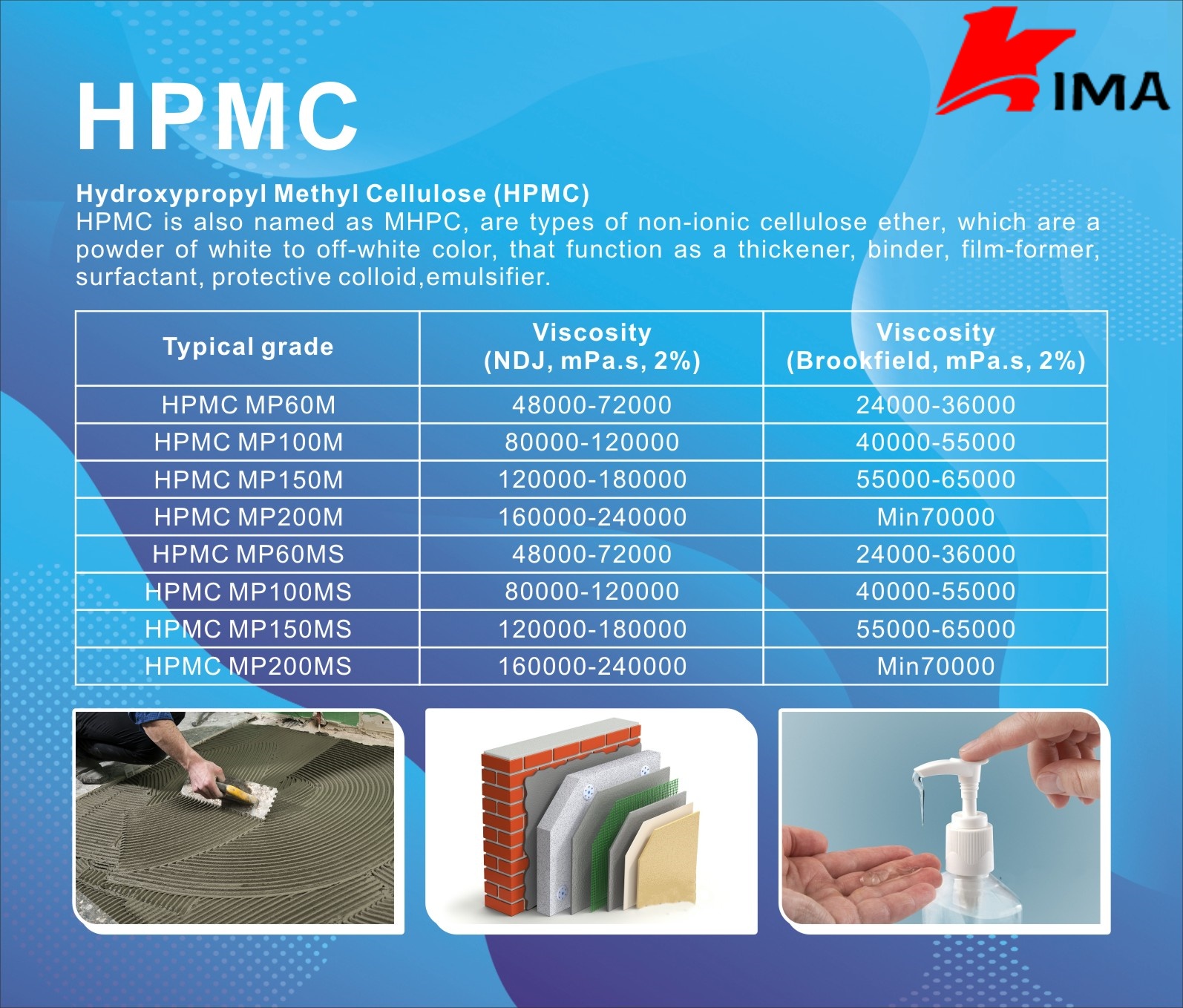
Procurement and formulation teams should request data beyond a single viscosity value. Relevant controls include viscosity grade, methoxy and hydroxypropyl substitution, moisture, ash content, pH, particle size, gel temperature, and dissolution behavior. Batch-to-batch consistency in these parameters is especially important because self-leveling compounds can be sensitive to small changes in water demand and set profile.
Surface-treated HPMC grades may be useful when controlled dispersion is needed. These products are designed to disperse in water before fully dissolving, which can reduce lump formation during mixing. The suitable choice depends on the drymix production process and the mixing conditions used by installers. A grade that works well in laboratory stirring should also be checked in the actual field mixing procedure, including the specified water addition sequence and mixing time.
The cellulose ether must also be compatible with the rest of the additive package. Polycarboxylate ether dispersants, retarders, accelerators, defoamers, starch ethers, lithium salts, and redispersible polymer powder can all affect fresh-state behavior. Rather than evaluating HPMC in isolation, test it in the intended commercial formula.
Dosage Is a Formulation Decision, Not a Fixed Number
HPMC is often used at a low level relative to total dry powder, but small adjustments can noticeably change flow, water demand, and workability. Increasing dosage may improve cohesion and water retention, yet it can also reduce spread, increase entrained air, delay setting, or alter surface hardness. Reducing dosage may restore flow but create bleeding, weak surface formation, or inconsistent performance on porous substrates.
A structured dosage trial should compare at least three levels around the proposed starting point. Keep water content, mixing energy, temperature, and additive ratios constant while measuring flow immediately after mixing and after the required working interval. Record visual observations as well as numerical results. Edge stability, aggregate settlement, foam persistence, and ease of spike rolling often reveal issues that a single flow-ring measurement does not show.
Water addition should never be adjusted casually to compensate for an unsuitable HPMC grade. Adding more water may recover initial flow, but it can weaken the hardened layer, extend drying time, increase shrinkage risk, and cause surface laitance. The better approach is to optimize the balance among HPMC, dispersant, filler gradation, binder content, and polymer modification.
Field Performance Factors That Matter
Laboratory flow tests are essential, but they do not reproduce every installation condition. Substrate porosity, ambient temperature, relative humidity, water quality, mixer type, mixing time, and transport time can all influence field behavior.
For example, high substrate absorption places greater demand on water retention. A formulation with very low cellulose ether content may appear acceptable on a sealed test panel but lose performance over a dry concrete substrate. Conversely, a formulation designed for exceptional water retention may be too slow or too viscous for rapid-placement projects in moderate conditions.
Air management is another critical issue. HPMC can affect how air is incorporated and retained during mixing. Excessive entrained air can reduce density, compromise compressive strength, and create pinholes or craters after placement. A compatible defoamer and appropriate mixer speed are often necessary, especially in highly fluid cementitious systems.
Setting profile should be verified after every meaningful change to HPMC grade or dosage. Depending on the formulation, cellulose ether may influence the availability of water and the interaction of other admixtures with cement. In rapid-setting products, even modest changes in workability window can affect production specifications and installer acceptance.
A Practical Evaluation Plan for Formulators
A disciplined evaluation program avoids choosing HPMC on price or viscosity alone. Begin with a reference formula and a clearly defined target: required flow, working time, thickness range, setting window, compressive strength, and surface-quality standard. Compare candidate grades at equivalent dosage, then optimize dosage only after identifying the most suitable rheology profile.
Test fresh properties at relevant temperatures. Measure flow at initial mixing and throughout the specified working period, then assess segregation, bleeding, air content, density, and surface leveling. After curing, evaluate compressive and flexural strength, adhesion where relevant, shrinkage behavior, surface hardness, and defects such as pinholes or powdering.
Production-scale confirmation is equally important. Variations in filler moisture, blending time, and packaging conditions can change how a drymix product performs. A qualified HPMC supplier should be able to provide consistent material specifications, technical documentation, retained-batch traceability, and responsive support during formulation trials.
Supply Consistency Supports Product Consistency
For commercial self-leveling compounds, a technically suitable HPMC grade must also be available with dependable quality and supply continuity. Buyers should assess manufacturing controls, capacity, quality testing, packaging options, export documentation, and the supplier’s ability to maintain specifications across repeat orders.
Kima Chemical supplies HPMC and related drymix additives for industrial formulation requirements, supported by automated DCS-controlled production and direct technical and commercial communication. For buyers developing or reformulating floor underlayments, sharing the binder system, target flow, dosage range, and regional performance requirements makes grade recommendations and sampling more productive.
The most effective HPMC choice is the one that helps a self-leveling compound remain stable in the bag, predictable in the mixer, fluid during placement, and sound after cure. Treat the grade as part of the complete formulation design, and the result is a more reliable product for both the production line and the job site.