
A cement render can look acceptable at the mixer yet fail where it matters most: on the wall. Rapid water loss into an absorbent substrate, dragging under the trowel, poor cohesion at the edge, or cracking during early cure can turn a routine drymix formula into a costly site complaint. MHEC for cement render is used to control these application-critical properties by improving water retention, consistency, and open time in cement-based mortar.
For drymix manufacturers, the objective is not simply to make render thicker. The right MHEC grade must support reliable mixing, pumping or spraying where required, easy spreading, stable build, and sufficient cement hydration under changing jobsite conditions. Grade selection therefore needs to begin with the mortar system, local aggregates, intended application thickness, and performance target rather than viscosity alone.
What MHEC Does in Cement-Based Render
Methyl Hydroxyethyl Cellulose, commonly called MHEC, is a nonionic cellulose ether used as a functional additive in cementitious formulations. Once dispersed and hydrated in water, it increases the water-holding capacity of the fresh mortar and modifies rheology. This gives the render a more controlled, workable feel while reducing premature moisture loss to masonry, concrete, or aerated substrates.
Water retention is central to render performance. Cement needs adequate water and time to hydrate. When the substrate draws water out of a fresh coat too quickly, the mortar may become difficult to finish and may not develop the intended bond or mechanical properties near the interface. MHEC helps retain water within the mortar matrix, supporting more uniform curing conditions.
The additive also contributes to workability. A properly selected grade can help the mortar spread more evenly, reduce dry drag, and maintain a consistent texture through its usable working period. In machine-applied render, rheology control can support smoother conveyance and more stable spray behavior. The balance is delicate: excessive thickening can increase mixing demand, reduce output, or make the material feel heavy during application.
Why Grade Selection Is More Than Viscosity
Viscosity is a useful starting point, but it is not a complete specification for MHEC in cement render. Two products with a similar stated viscosity may perform differently in a mortar because substitution pattern, particle size, dissolution behavior, surface treatment, and production consistency also affect the final result.
A higher-viscosity MHEC generally provides stronger thickening and can support water retention, but it may not be the best choice for every formulation. Fine finishing renders may need a smoother, lighter troweling response. Thick base coats and spray renders may require greater body, sag resistance, and water retention. The cement type, filler distribution, sand grading, polymer content, and use of supplementary binders all influence the optimum selection.
For procurement and formulation teams, a practical specification should define the performance requirement rather than relying only on a single viscosity number. Relevant items include apparent viscosity test method and concentration, moisture content, pH, particle-size behavior, gel or lump resistance, water retention in the target mortar, and consistency from lot to lot. These controls make it easier to qualify material for repeatable industrial production.
Surface-Treated and Fast-Dispersing Grades
Surface-treated MHEC grades are often selected for drymix mortar because they disperse in water before fully dissolving. This helps reduce immediate lump formation during mixing and allows the material to hydrate in a controlled manner. In a properly designed dry blend, this can improve mixing practicality for both factory production and end-user preparation.
However, fast dispersion should be assessed in the actual system. Water temperature, mixing intensity, mixing time, package instructions, and the sequence in which contractors add water all affect hydration. A grade that performs well in a laboratory cup test still needs verification in the intended mixer and application method.
Key Formulation Effects to Evaluate
Water retention, workability, and consistency are the primary reasons to use MHEC, but a cement render program should evaluate several linked properties. Improving one property can change another, particularly when dosage is pushed beyond the practical range.
- Water retention and curing: The render should resist rapid water loss into the substrate while allowing normal cement hydration and finishability.
- Trowelability and slip: Mortar needs to spread easily without excessive drag, while remaining stable on vertical surfaces at the required layer thickness.
- Open time and adjustment: Applicators need enough time to level, rule off, or texture the render before the surface becomes difficult to rework.
- Machine application behavior: For spray render, assess mixing, pumpability, hose conveyance, spray pattern, rebound, and stability after application.
- Bond and surface quality: Test adhesion to relevant substrates as well as cracking tendency, surface cohesion, and the risk of weak or dusty finishes.
The dosage of MHEC is typically a small fraction of the dry formulation, but small changes can have a noticeable effect. There is no universal addition level that fits every render. A lightweight insulating render, a standard cement-sand base coat, and a thin finishing coat can require different rheology profiles and cellulose ether levels. Laboratory screening should begin with a reasonable reference formulation and progress through controlled dosage adjustments rather than changing multiple additives at once.
Interactions With Other Drymix Additives
MHEC operates within a complete formulation, not in isolation. Redispersible polymer powder can improve adhesion, flexibility, and cohesion, while MHEC supports water retention and fresh mortar handling. The combination is common in higher-performance render systems, but the best ratio depends on the binder level, aggregate type, substrate, and target properties.
Starch ether may be used in some formulations to increase anti-sag behavior and improve application feel. Air-entraining agents can alter density, spreadability, and pumpability. Retarders, accelerators, hydrophobic agents, and mineral fillers may also change the apparent response of the cellulose ether. For example, a formulation with high fines may already have substantial water demand, while a coarse sand blend may need a different rheological approach to avoid segregation or poor finishability.
Cement chemistry also matters. Portland cement, blended cement, calcium aluminate-containing systems, and gypsum-modified materials can respond differently. Changes in local raw materials should trigger at least a focused validation test, even when the MHEC grade remains unchanged.
A Practical Qualification Process for Buyers
A structured qualification process reduces the risk of selecting a grade based only on a technical data sheet. First, define the render type, application method, target layer thickness, cement and aggregate sources, and required workability period. Next, compare candidate MHEC grades in a fixed base formulation under the same mixing and conditioning procedure.
Fresh-mortar testing should include water demand, flow or consistency, water retention, density, workability over time, and vertical stability. Where machine application is relevant, test the material on representative equipment rather than inferring pumpability from hand-mixed samples. Hardened testing should address adhesion, compressive strength where applicable, cracking behavior, and surface appearance after curing.
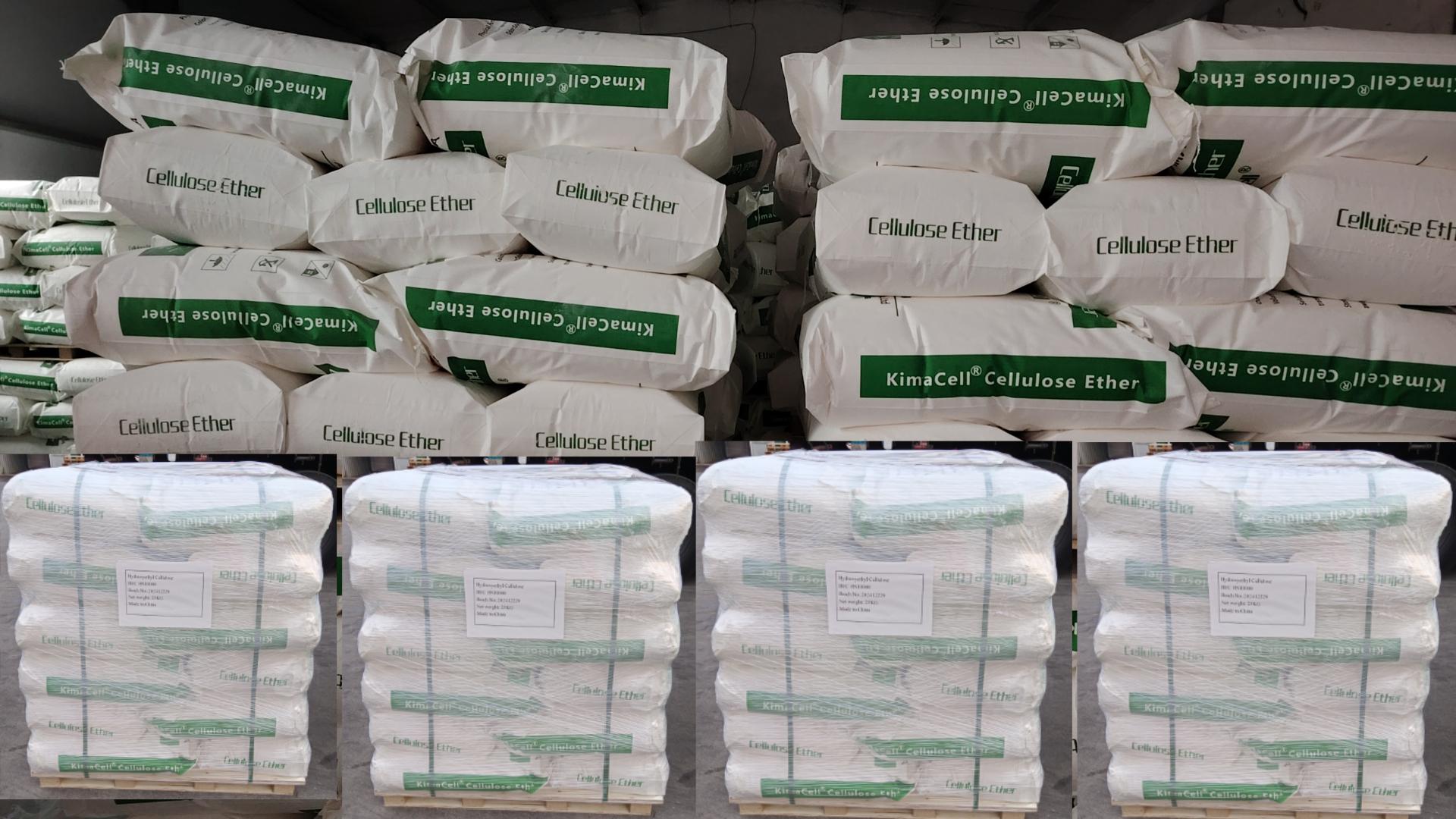
Commercial qualification should run alongside technical testing. B2B buyers need confidence that the approved grade can be supplied at the required volume with dependable lot consistency, clear quality documentation, and responsive export handling. Kima Chemical supports industrial customers with MHEC and related cellulose ether materials produced under automated process controls, with technical discussions focused on the actual formulation and purchasing requirement.
Common Problems and What They May Indicate
If a render dries too quickly or shows poor surface workability, the formulation may need stronger water retention, but the substrate condition and curing practice should also be checked. Highly absorbent masonry may require pre-wetting or a suitable primer. Increasing MHEC alone cannot correct every application variable.
If the mix feels overly sticky, difficult to pump, or slow to wet out, the grade, dosage, particle behavior, or overall fines level may be too high for the system. Reducing dosage can help, but so can reviewing starch ether, polymer powder, air content, and aggregate grading. If vertical sag occurs, the answer may require a more balanced rheology package rather than simply selecting the highest-viscosity cellulose ether available.
The most reliable MHEC program is built around the render’s real production and application conditions. Specify the required performance, validate the grade in the complete drymix system, and maintain consistent incoming-material controls. That approach gives formulators a clearer route to stable mortar quality and gives procurement teams a stronger basis for long-term supply decisions.